Mestizo society began on “Española” when Spanish rebels squatting in Xaraguá cohabitated and had children with Xaraguán women and Spanish settlers loyal to Columbus did so elsewhere on the island.
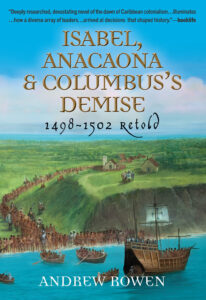
Isabel, Anacaona & Columbus’s Demise: 1498–1502 Retold depicts the evolution of the cohabitation from both Taíno and Spanish perspectives. Initial unions were largely the result of Spanish men domineering and the threat or use of force. Over time, some unions evolved into family units where the Taíno woman incorporated Taíno custom into daily family life, and other unions were simply discarded at will by the Spanish man, when he returned to Spain or otherwise. Some Spanish men wanted their women to be baptized and to marry them and that the offspring be baptized and be treated as free men. Taíno civilization has been borne through centuries in part by descendants of these unions.
The Foreword advance review expressly notes the depiction: “The narrative perspective is varied. It includes the voices of mercurial, shrewd Columbus, diplomatic and pious Isabel, and Anacaona…Their development is complex and compelling, as is that of secondary characters: Some settlers are escaping Spain’s classist society; some marry Indigenous women and form meaningful attachments to their new communities. Others are exploitative and intolerant.”
Find the full book description, advance reviews, and purchase links on my website, www.andrewrowen.com