As depicted in Isabel, Anacaona & Columbus’s Demise, the ink on Queen Isabel’s decree of June 20, 1500, freeing “Indians” enslaved by Columbus (see prior post) had barely dried when Alonso de Hojeda sold two hundred Indians in Cádiz’s slave market. Isabel had licensed Hojeda as a conquistador in 1499, and he had explored and claimed for her coastline of what is now Venezuela. On his return voyage to Spain in 1500, he’d stopped for a few months in “Española” and then veered north to slave raid in the Lucayan Islands (the Bahamas), reaching Spain with the captives by mid-June. Isabel’s ministers considered the territory slave-raided unworthy of conquest, and it fell outside Hojeda’s license.
Isabel’s decree of June 20 didn’t apply to prohibit the sale. Perhaps the Lucayans’ resistance, or their status of not being the sovereigns’ vassals in territory subject to conquest, permitted their enslavement.
Then relatively unknown, one Amerigo Vespucci had participated in Hojeda’s voyage, and on July 18, 1500, Vespucci composed a letter vaunting the voyage and characterizing it as under his command, never mentioning Hojeda. Vespucci had previously worked in Seville’s slave-trading business, and the letter perfunctorily described the slave sale: “On arriving in Cadiz we sold our slaves, of which we had two hundred, the others among the initial 232 having died on the ocean.”
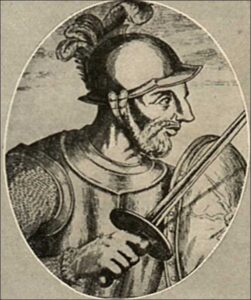
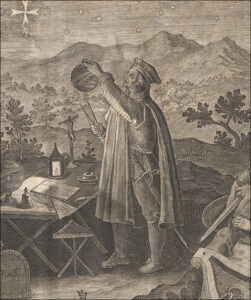
The following engraving of Hojeda is taken from Antonio de Herrera’s Historia General, 1601. Jan Collaert II’s engraving of Vespucci observing the Southern Cross is courtesy of the Museum Plantin-Moretus, Antwerp, Belgium.